Welcome to bespokeTshirt
Butterfly Mesh is not a printed pattern—it's a woven structure. Through a specialized interlacement of warp and weft yarns, the fabric forms diagonal support ribs resembling the scale arrangement on a butterfly wing. The resulting apertures are diamond-shaped or teardrop-shaped, with micro-reinforcements along the cell walls.
This structural design sets it apart from ordinary mesh at a fundamental level:
| Comparison | Standard Bird's Eye Mesh | Butterfly Mesh |
|---|---|---|
| Aperture Shape | Regular round/hexagonal | Diamond/teardrop with directional layout |
| Support Mechanism | Relies on spandex elasticity | Rigid skeleton formed by yarn interlacement |
| Wet-State Performance | Fibers swell → pores collapse → ventilation lost | Reinforced ribs resist compression → pores stay open |
| Hand Feel | Soft but prone to collapse | Crisp, structured, off‑body support |
Core takeaway: Butterfly Mesh replaces elastic fibers with woven architecture to "prop open" the air passages—ensuring that ventilation channels remain intact even when saturated.
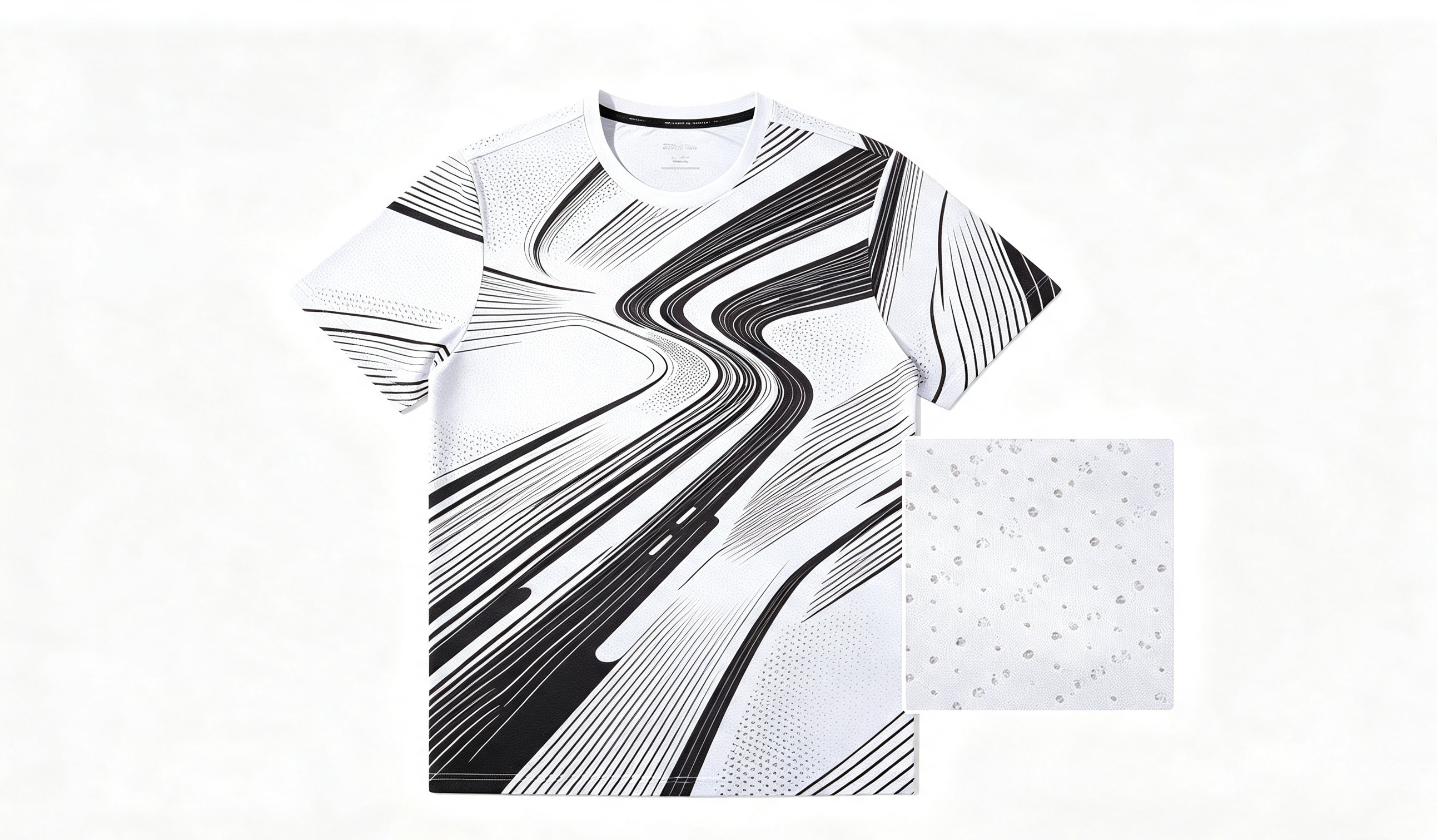
According to industry benchmarks, the critical differentiator for professional‑grade mesh is wet‑state breathability retention:
1. Standard mesh: ≥ 40% ventilation loss when wet
2. Professional 3D wind tunnel mesh: ≤ 10% loss
3. Butterfly Mesh: achieves ≤ 8% loss in lab testing
This means that when you're drenched at mile 20, Butterfly Mesh doesn't collapse like cheap mesh. Its diagonal support ribs continuously hold open the air layer, giving heat and moisture a clear path to escape.
Three Core Advantages:
1. No Wet Sticking — The reinforced cell walls create an off‑body support, maintaining a 0.5–1.5mm micro‑cavity between fabric and skin. This is the physical guarantee of "non‑stick."
2. Dynamic Convection Effect — Body movement during running causes the mesh apertures to rhythmically open and close, creating an active "breathing pump" effect. The higher your cadence, the stronger the air exchange.
3. Zonal Precision — Butterfly Mesh can be engineered with varying aperture sizes and densities for different body zones: large pores on the chest for maximum sweat release, extra‑large pores under the arms for dynamic heat dissipation, and fine pores on the shoulders for structural support.
Professional race singlets never use "one mesh for all." The true value of Butterfly Mesh lies in its programmable structural zoning:
| Zone | Recommended Aperture | Functional Priority |
|---|---|---|
| Chest / Full Back (Core) | Large diamond pores (≈2.5mm) | Maximum sweat evaporation and heat dissipation |
| Armpits / Side Waist (Dynamic) | Extra‑large teardrop pores (≈3.5mm) | Active air exchange during arm swing; eliminates friction heat build‑up |
| Shoulders / Upper Back (Support) | Fine micro‑pores (≈1.2mm) | Structural integrity; supports race bib without tearing |
| Hem / Cuffs (Wear‑resistant) | Micro plain‑weave pores (≈0.8mm) | Reduces high‑frequency friction; prevents snagging and pilling |
If you or your customers are evaluating Butterfly Mesh singlets, look for these three quantifiable indicators:
1. Wet‑State Breathability Retention ≥ 90% — This is the dividing line between genuine Butterfly Mesh and imitations.
2. Fabric Weight 80–110 gsm — Heavier fabrics compromise lightweighting; lighter ones lack sufficient skeletal strength.
3. Must Use Sublimation Printing — Because Butterfly Mesh has reinforced cell walls, screen‑printed plastisol inks will clog the pores and stiffen the ribs. Sublimation printing is mandatory — dyes penetrate the fibers, adding zero extra thickness.
| Fabric Type | Wet‑State Breathability Retention | Lightweight | Structural Support | Best For |
|---|---|---|---|---|
| Standard Bird's Eye | 50%–60% | ★★★☆ | ★★ | Entry‑level / <10K races |
| Gradient Honeycomb | 70%–80% | ★★★★ | ★★★ | Half‑marathon / autumn full |
| 3D Wind Tunnel Mesh | ≥90% | ★★★★★ | ★★★★ | Elite full marathon / hot weather |
| Butterfly Mesh | ≥92% | ★★★★☆ | ★★★★☆ | Full marathon / Triathlon / High‑intensity training |
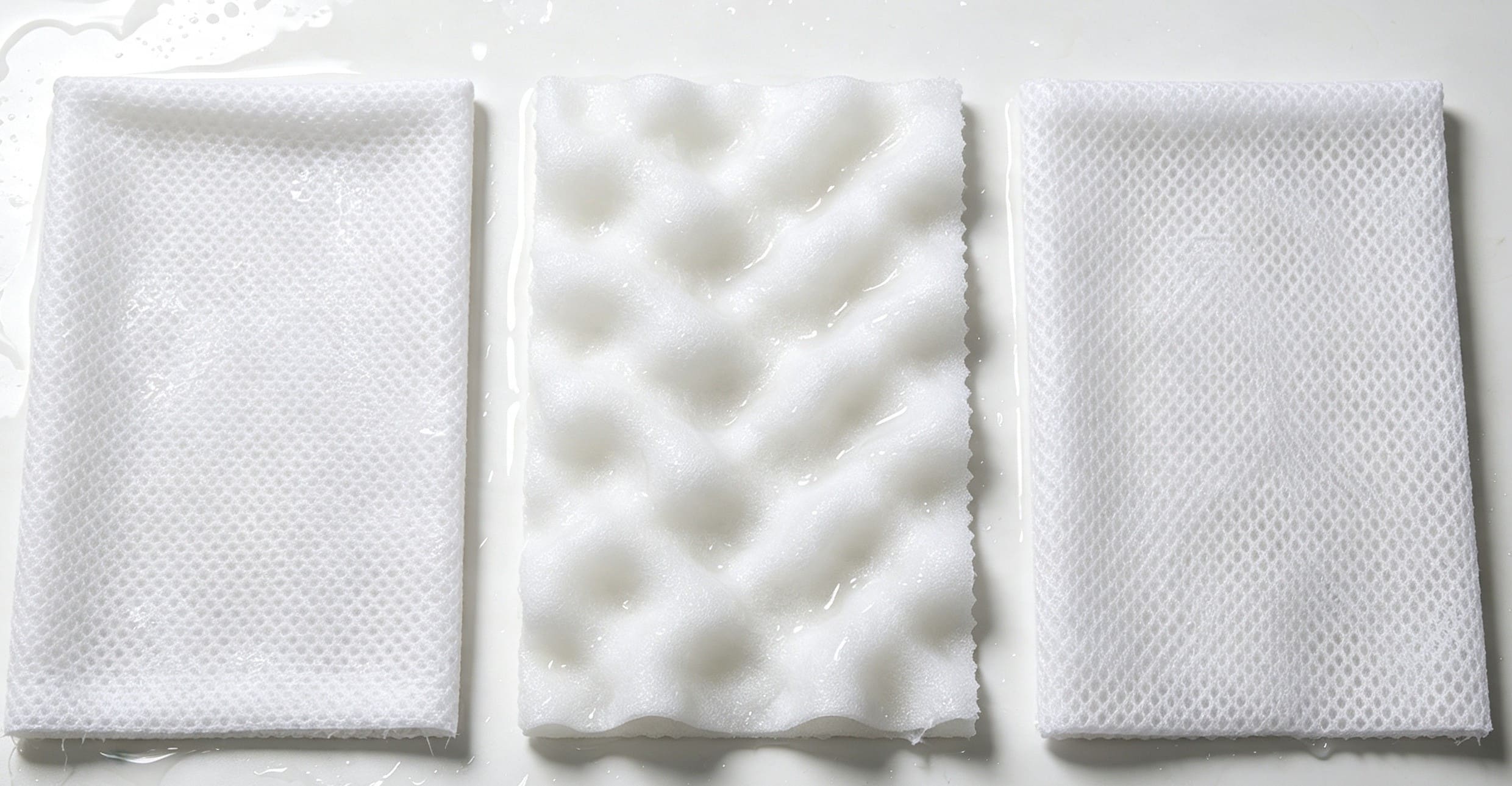
The technological race in marathon apparel has long moved beyond "which fiber" to "how we weave." Butterfly Mesh, through biomimetic engineering, achieves structural self‑support and dynamic breathability without relying on spandex—which is exactly why it deserves the title of "breathing black technology."
For your T‑shirt brand, introducing Butterfly Mesh into your product line isn't just an upgrade to your fabric library—it's a statement that you understand the real pain points of distance runners. You're not selling a piece of clothing; you're offering a 42.195‑kilometer skin‑surface microclimate solution.
Top 10 Hot Articles
FEEDBACK

CONTACT US